Your guide to Kuwait City

Kuwait City highlights
Where to stay
Sharq is Kuwait City’s modern downtown, with glass skyscrapers, waterfront hotels and easy access to the Kuwait Towers and Souk Al-Mubarakiya. Nearby, Jibla is one of the city’s oldest neighbourhoods, home to the Kuwait National Museum and Al Bahhar Entertainment Historical Village’s craft workshops. For a quieter stay, consider Abdullah al-Salem, one of Kuwait City’s most affluent residential areas.
Striking skyscrapers
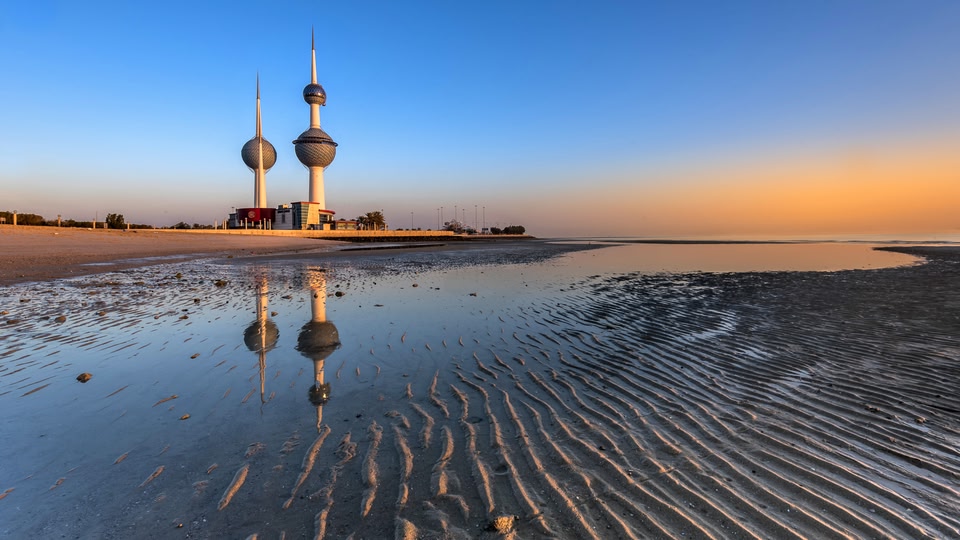
Kuwait City’s skyline is defined by the unmistakable Kuwait Towers, which have become the city’s symbol. Head up to the viewing deck for panoramic Gulf views, and stick around for sunset when they light up. Nearby, the Al Hamra Tower rises as the country’s tallest building, while the Liberation Tower honours Kuwait’s postwar recovery.
Seaside leisure
The city’s position on the Persian Gulf gives it a long, scenic waterfront with a ‘corniche’ (promenade) popular for evening walks and fishing. While the seafront is better suited to strolls than swimming, you can easily enjoy a beach day on your trip to Kuwait City by heading south to Al Khiran and its pristine, golden sands.
Kuwait City: Know before you go
| Language | Arabic |
|---|---|
| Currency | Kuwaiti dinar (د.ك) |
| Time zone | UTC+3 (AST) |
| High season | December - February |
| Low season | May - September |
Things to do in Kuwait City
Take in the culture
Museums in Kuwait City offer a wide look at the country’s history and culture. The Tareq Rajab Museum stands out for its collection of Islamic art, while the Memorial Museum focuses on the Iraqi invasion and occupation. You can also book a free tour of the Grand Mosque, the country’s largest.
Places to eat
Kuwait’s food scene nods to the region’s past as an important trading hub, with flavours from Persia, India and East Africa. Look out for dishes like ‘machboos’ (spiced rice with meat) and ‘gabout’ (stuffed dumplings in a meat stew) at traditional restaurants in Kuwait City. Craving something sweet? Try ‘elba’, a custardy pudding infused with saffron and cardamom.
Shopping
From traditional souks to vast modern shopping centres, Kuwait City is known for its shopping. Head to Souk Al-Mubarakiya for spices and perfumes, or browse The Avenues for international brands and an air-conditioned break from the heat. If you’re hunting souvenirs, check out oud fragrances, gold jewellery and colourful scarves. Prices are fixed in shopping centres, but feel free to haggle in markets.


