Holidays to Normandy
Top destinations in Normandy

Caen
Caen’s centrepiece is a hilltop castle built by William the Conqueror. But don’t miss its fascinating museums, ornate abbeys and profound D-Day memorial in this French port city.

Deauville
From its show-stopping beach to its Art Deco bathing cabins and chic waterfront restaurants, this French seaside resort is dripping with old-school glamour.
Normandy: fast facts
| Language | French |
|---|---|
| Currency | Euro (€) |
| Time zone | Caen - UTC+1 (CET) and UTC+2 (CEST) |
| High season | June – September |
| Low season | November – March |
Normandy holiday highlights
Learn about D-Day
Visiting the D-Day beaches is among the top things to do in Normandy. On 6 June 1944, this coastline witnessed one of the largest land, air and sea military operations in history, known as D-Day. Historians consider it the beginning of the end of World War II. Pay tribute at the beaches, cemeteries and memorials, then visit the immersive D-Day Experience in Carentan-les-Marais.
Visit medieval sites
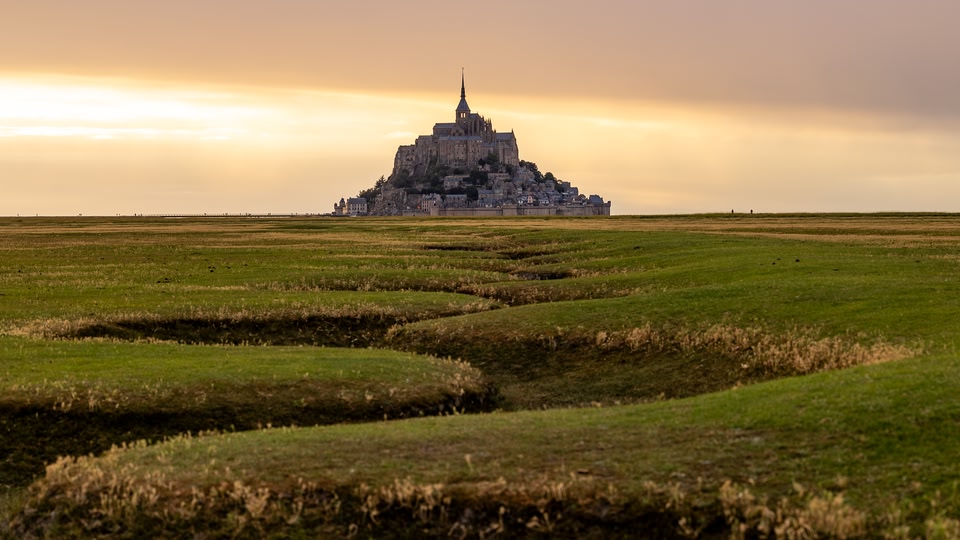
It’s hard not to be wowed by Mont-Saint-Michel, a medieval abbey perched on a tiny island. Check the tides before visiting this UNESCO site. You can stroll around it at low tide, while high tide offers stunning reflections from the bay. Discover more medieval history at the Bayeux Tapestry, an enormous artwork depicting the Norman Conquest of England in 1066.
Explore the coast
Art Deco beach cabins and half-timbered houses meet fine, powdery sands at Deauville. This historic seaside town has been a favourite for well-heeled visitors seeking sun and sea since the 1860s. In neighbouring Trouville, stroll the 19th-century boardwalk and bustling fish market. And the port town of Honfleur looks plucked straight from a postcard with its colourful houses overlooking the harbour.

Things to do in Normandy
Top attractions
If you only visit one D-Day beach, make it Omaha, the most significant assault area in the face-off between American and German troops. Check out the Overlord Museum while you’re there. You can’t leave Normandy without feasting your eyes on the massive Bayeux Tapestry. And don’t miss the Gothic architecture of Rouen Cathedral, which has the highest spire in France.
Beaches
The Chausey Islands are a protected nature reserve boasting plenty of hidden coves and wide, sandy beaches. Reach the archipelago by boat from Granville, a walled medieval town that’s worth exploring. Dragey-Ronthon offers epic views of Mont-Saint-Michel. And Cabourg is considered the most romantic beach in Normandy, with its Belle Époque architecture and yearly film festival.
Nature
Étretat’s jagged chalk cliffs have inspired generations of writers and artists, including Claude Monet. Walk up the headland for sweeping views of its breathtaking rock formations. Or head to Suisse Normande to hike rolling hills, dense forests and dramatic valleys. For countryside views and some of the best cider you’ve ever tasted, take a road trip along the 40-kilometre Cider Route.
Cuisine
Norman cuisine can be rich and decadent. Don’t leave without enjoying a mouthful of Camembert, the renowned local cheese that’s oven-baked till gooey and served with a baguette. Look out for ‘moules’ (mussels) at restaurants in Normandy, often served in a creamy, cider-infused sauce. Looking for something to fill your cup? Try the local cider or a dram of ‘Calvados’ (apple brandy).
Culture and museums
Monet’s House and Gardens in Giverny is a must-see museum in Normandy. Explore the Impressionist artist’s home and studio, then wander through vibrant floral landscapes that inspired famed works like ‘Water Lilies’. In Honfleur, visit Les Maisons Satie, the birthplace and home of the French composer Erik Satie. Then admire artworks inspired by Normandy’s landscapes at the Musée Eugène Boudin.
Nightlife
The nightlife in Normandy often starts with a sip of calvados. Taste the beloved apple brandy at historic distilleries like Boulard, Chateau de Breuil and Berneroy. Or head to Honfleur for sophisticated jazz clubs and cocktail bars set against a picturesque harbour. Craving a bit more action? Check out the beach clubs and historic seafront casino at Deauville.
Find the best time to visit Normandy
Weather in Normandy through the year
March – May: Apple and pear blossoms are the sign of spring in Normandy. The weather can still be chilly, but it’s a great time to explore without summer’s crowds if you don’t mind packing layers.
June – August: Summer offers highs of 22°C, perfect for beach days and dining outdoors. The D-Day Festival can bring crowds in June.
September – November: Crisp golden leaves, the apple harvest and local food festivals are autumn’s biggest draws. It often stays warm well into September, but the chill and rain set in from October.
December – February: Winter is cold and wet, and many attractions shut down or limit their hours. Christmas brings magical markets and festivities to Saint-Pierre-en-Auge, Caen and Rouen.
Events in Normandy
D-Day Festival (June): Normandy commemorates the events of 6 June 1944 with ceremonies and tributes at the D-Day landing sites. Look out for fireworks displays, air shows and historic tours — and book your place to stay well in advance.
Bayeux Medieval Festival (June or July): Travel back to the Middle Ages with historical re-enactments, a medieval market and street performances in this famous riverside town.
Deauville American Film Festival (September): Deauville’s old-school seaside glamour sets the mood for this signature festival, showcasing top new films from across the Atlantic.
Fête du Ventre (October): Rouen’s ‘belly festival’ will fill your stomach with cheese, wine, charcuterie, cider and more. With cooking demos, live music and a bustling market, it’s a feast for all the senses.
Know before you go
Budget
It’s possible to have a cheap holiday in Normandy, with plenty of free attractions, from the D-Day beaches to the cliffs of Étretat. Enjoy an inexpensive meal for about 13 euros (€) and a local beer or cider for around €6. A short taxi ride costs about €10.
Health and safety
When visiting Normandy’s beaches, check the flag system. Green means safe to swim, yellow signals caution, and red means stay out of the water. Some riverside towns experience flooding, so it’s smart to check local alerts before you go. During summer heat waves, stay hydrated and avoid direct sun during the hottest part of the day.
Free things to do
Marvel at the modern architecture of Rouen’s Église Sainte-Jeanne d'Arc, built on the site where the French heroine was killed. Then explore the nearby Musée des Beaux-Arts, whose impressive collection includes works by Rubens, Caravaggio, Degas and Monet. The famous white cliffs of Étretat are beautiful and free to visit. Head north along the Côte d'Albâtre for less-crowded spots like Fécamp or Veules-les-Roses.
Family friendly
History is made fun at the Airborne Museum, where kids can explore interactive D-Day exhibits and go on a war relic treasure hunt. The abbey of Mont-Saint-Michel is free for under-18s and offers family tours and guided bay walks. Need somewhere for the kids to burn off steam? Try Parc Festyland, a theme park with a Viking-inspired rollercoaster and historical villages.
Getting around Normandy
Public transport
Buses: Local operator NOMAD runs over 100 public bus routes, covering large cities and rural areas. Use the Atoumod app to buy tickets.
Trains: Normandy is easy to explore by rail. To visit the D-Day sites, take the train to Bayeux, a 30-minute bus ride from the American Cemetery and Omaha Beach. Reservations are required on high-speed TGV services from Paris to other French cities.
Boats: Travelling from the UK or Ireland? You can catch a ferry to Cherbourg or Le Havre. Many private operators also offer River Seine cruises and boat trips on the Caen Canal.
Domestic flights
Normandy has four airports (Caen, Deauville, Le Havre and Rouen), but most travellers fly into Paris and catch a train to the region. France has banned short-haul flights if the equivalent train journey is under two and a half hours.
Driving and car hire
With green countryside, chalk cliffs and medieval villages, Normandy is a road-tripper’s dream. Most cars here are manual, so request an automatic if you need one. And note that some rental agencies require you to be over 21. City speed limits are usually 50 kilometres per hour, but may be as low as 30.


